The iPod in 2009: Year in Review
Macworld and a DRM-free store
Phil Schiller gave Apple's final Macworld Expo keynote on 6 January, the company having said that 2009 would be its last year at the show. That day Apple said eight million of the iTunes Store's ten million songs were available without DRM, with the remaining two million to follow by the end of March, and that from April songs would cost 69 cents, 99 cents or US$1.29. Later in January Apple reported a record 22,727,000 iPods sold in the quarter ended 27 December 2008.
A talking shuffle and a billion apps
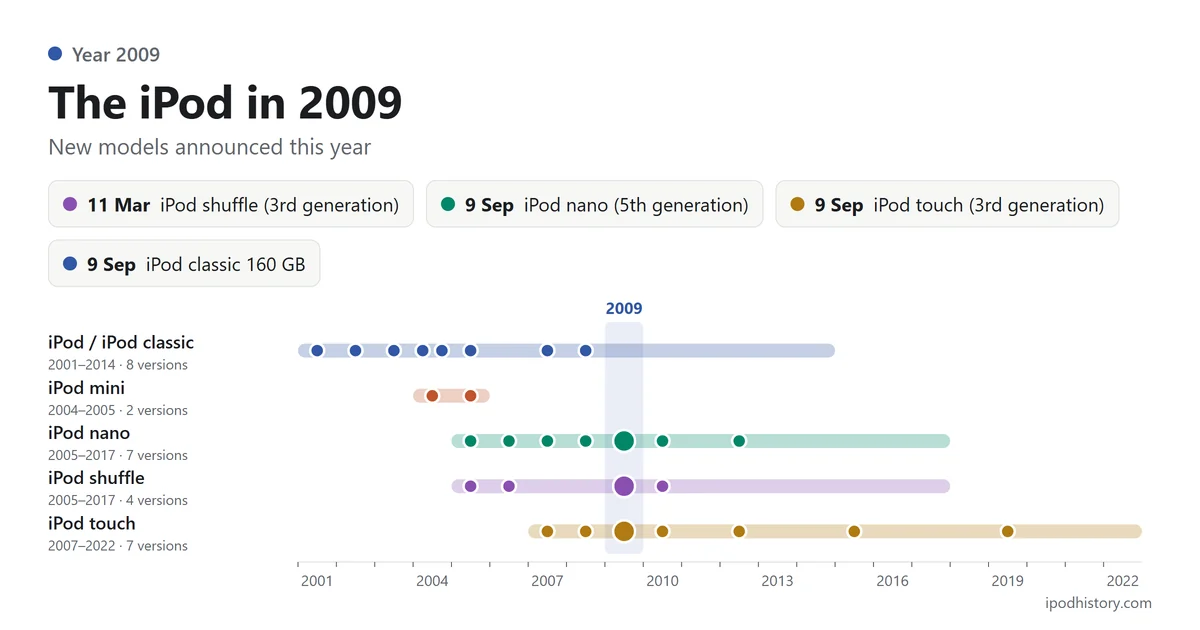
On 11 March a smaller iPod shuffle appeared. The third-generation model had no playback buttons on its body: a remote on the earphone cord handled playback, and VoiceOver read out song titles, artists and playlist names. It held 4 GB and cost US$79. On 24 April the App Store passed one billion downloads, with more than 35,000 applications offered to iPhone and iPod touch users in 77 countries.
The September event
Steve Jobs, back after a liver transplant, opened Apple's music event on 9 September with an appeal for organ donation. Apple said it had sold more than 220 million iPods, and it renewed the range for the holidays. The fifth-generation iPod nano added a video camera, an FM radio and a pedometer, starting at US$149. The iPod classic was offered as a single 160 GB model at US$249. The third-generation iPod touch came in 32 GB and 64 GB versions at US$299 and US$399, alongside an 8 GB model at US$199 that used the previous hardware. The shuffle gained a 2 GB version at US$59, more colours and a polished stainless steel 4 GB edition at US$99.
iTunes 9
iTunes 9, released the same day, added Genius Mixes, which generated up to 12 continuous mixes from songs in a user's own library, iTunes LP for selected albums, and Home Sharing, which moved music, films and television programmes between up to five authorised computers in a home. At the event Apple said 8.5 billion songs had been downloaded from iTunes and that the store had 100 million accounts.